
A Complete Guide
Table of Contents
- Introduction: Why Herbal Agarbatti Matters in Indian Spiritual Culture
- What Is Herbal Agarbatti? Understanding the Basics
- The Spiritual and Practical Role of Agarbatti in Pooja
- Key Benefits of Using Herbal Agarbatti
- A Complete Guide to Agarbatti Fragrances
- How to Choose the Right Herbal Agarbatti for Your Practice
- What Is Panchagavya-Based Agarbatti?
- Practical Tips for Using Agarbatti Safely and Effectively
- Exploring the GowDurbar Herbal Agarbatti Collection
- FAQ Section
- Conclusion: Choosing Agarbatti as an Act of Devotion
Introduction: Why Herbal Agarbatti Matters in Indian Spiritual Culture
For thousands of years, the burning of incense has been woven into the fabric of Indian spiritual life. From the mantras of the Vedas to modern-day morning pooja, agarbatti (incense sticks) have served as a bridge between the physical and the sacred — filling homes and temples with fragrance that signals devotion, purity, and presence.
In recent years, a quiet but significant shift has taken place: more devotees are moving away from synthetic incense products and returning to herbal agarbatti — incense made from natural plant-based ingredients, traditional wood powders, and time-tested formulations rooted in Ayurvedic and Vedic traditions.
But what exactly makes herbal agarbatti different? Which fragrance is right for your spiritual practice? And how do you choose from the growing variety available today?
This guide answers all of those questions — and more.
What Is Herbal Agarbatti? Understanding the Basics
Herbal agarbatti is incense made primarily from natural botanical ingredients — including herbal powders, aromatic wood powders (such as sandalwood and cedarwood), plant-derived essential oils, resins, and binding agents derived from natural sources. Unlike many mass-produced incense sticks that rely on synthetic fragrances and chemical binders, herbal agarbatti draws on traditional Indian formulations passed down through generations.
The result is an incense that:
- Produces a more natural, authentic fragrance profile
- Aligns closely with the Vedic and Ayurvedic traditions of aromatic worship
- Is widely preferred for use in temples, pooja rooms, and meditation spaces
Many variants today are also Panchagavya-based, meaning they incorporate ingredients traditionally considered sacred in Hindu practice, lending them additional spiritual significance.
The Spiritual and Practical Role of Agarbatti in Pooja
Fragrance is not merely aesthetic in Indian worship — it carries ritual, symbolic, and psychological significance. The act of lighting agarbatti during pooja is rooted in the concept of Panchopachar (five ritual offerings), one of which is Dhoop (incense or fragrant smoke).
Why Agarbatti Is Lit During Worship
Purification of Space: In traditional belief, fragrant smoke purifies the surrounding environment, both physically and spiritually, before and during worship.
Invocation and Offering: The rising smoke is seen as carrying prayers upward — an offering of fragrance to the deity being worshipped.
Enhancement of Focus: The sensory cue of a specific fragrance helps the mind shift into a state of devotion and stillness. This is not just cultural — modern aromatherapy research supports the role of scent in influencing mood and cognitive states.
Marking Sacred Time: Lighting agarbatti at the start of pooja signals a transition from ordinary activity to devotional practice, helping practitioners be fully present.
Atmospheric Transformation: A pooja room that smells of sandalwood or jasmine feels qualitatively different from an ordinary room. Fragrance helps create a sacred atmosphere that supports ritual.
Key Benefits of Using Herbal Agarbatti
- Creates a Devotional Atmosphere
The most immediate benefit of burning herbal agarbatti is the transformation of the surrounding space. A prayer room filled with the warm scent of sandalwood or the sweetness of jasmine naturally encourages a devotional mindset and deeper concentration during worship.
- Supports Meditation and Mindfulness
Aromatic environments are a foundational tool in many meditative traditions. Scents like sandalwood, cedarwood (Woods), and jasmine have long been associated with mental calmness and inward focus. Using herbal incense during meditation or pranayama can serve as an olfactory anchor — a sensory cue that helps the mind settle into stillness.
- Enhances Daily Pooja Rituals
Whether it is a simple morning prayer or an elaborate festival ritual, agarbatti elevates the experience. The fragrance signals the beginning of something sacred, sharpening the devotee’s attention and intention.
- Freshens and Purifies Living Spaces
Beyond spiritual use, herbal agarbatti naturally deodorizes and freshens prayer rooms, living areas, and meditation spaces — without the harsh chemical residues that synthetic air fresheners can leave behind.
- Carries Cultural and Traditional Value
Using herbal agarbatti connects practitioners to a lineage of worship that stretches back centuries. It is a simple way of honouring traditional practices while remaining spiritually present in daily life.
- Suitable for All Occasions
From everyday morning pooja and weekly rituals to major festivals like Diwali, Navratri, Mahashivratri, and Ganesh Chaturthi, herbal agarbatti is versatile enough for every occasion on the Hindu devotional calendar.
A Complete Guide to Agarbatti Fragrances: What Each Scent Means and When to Use It
One of the most important decisions when choosing agarbatti is fragrance selection. Different aromas carry different spiritual associations, Ayurvedic properties, and atmospheric qualities. Here is a detailed breakdown of the most popular herbal agarbatti fragrances:
🪵 Sandal (Sandalwood) Agarbatti
Fragrance Profile: Warm, woody, creamy, and deeply calming. Sandalwood’s base note is rich and long-lasting, with a subtle sweetness that deepens over time.
Spiritual Significance: Sandalwood (Chandan) holds one of the highest positions in Hindu worship. It is offered to deities across traditions — from Vishnu and Lakshmi to Shiva and Durga. The fragrance is believed to attract positive energies and promote spiritual clarity.
Ayurvedic Properties: In Ayurveda, sandalwood is considered cooling and grounding. Its aroma is associated with calming Pitta dosha, reducing mental agitation, and supporting meditative states.
Best Used For: Daily pooja, deep meditation, Satyanarayan Puja, and any practice requiring sustained focus and spiritual elevation.
🌹 Rose Agarbatti
Fragrance Profile: Fresh, floral, soft, and uplifting. Rose incense offers a lighter, more romantic fragrance compared to heavier woodsy scents.
Spiritual Significance: Rose is associated with the goddess Lakshmi and is used in love, devotion, and prosperity rituals. Its sweetness is considered welcoming and auspicious.
Best Used For: Morning pooja, welcoming guests, home fragrance, and festivals celebrating abundance and beauty.
🌸 Jasmine (Mogra) Agarbatti
Fragrance Profile: Sweet, heady, and floral with a gently intoxicating quality. Jasmine’s scent is deeply familiar in Indian devotional contexts.
Spiritual Significance: Jasmine (Mogra) is one of the most sacred flowers in Indian tradition, offered to deities and used in garlands during worship. Its fragrance is associated with purity, positive energy, and spiritual openness.
Ayurvedic Properties: Jasmine aroma is considered uplifting and antidepressant in nature — used to reduce anxiety and promote emotional wellbeing.
Best Used For: Meditation, relaxation, evening prayers, and creating a soothing home environment.
🦌 Kasturi Agarbatti
Fragrance Profile: Rich, warm, earthy, and musky. Kasturi (musk) is a deeply complex fragrance that unfolds in layers — instantly recognisable as premium and traditional.
Spiritual Significance: Musk-based fragrances have been used in sacred contexts across South Asian traditions for centuries, valued for their depth and longevity. Kasturi agarbatti is considered a high-devotional offering befitting special prayers and occasions.
Best Used For: Special rituals, Diwali pooja, occasions requiring a premium fragrance experience, and worship of major deities.
🌿 Thulasi Agarbatti
Fragrance Profile: Herbal, clean, slightly peppery, and deeply refreshing. Tulsi’s scent is unmistakably medicinal and sacred.
Spiritual Significance: Thulsi (Holy Basil) is one of the most revered plants in Hinduism, considered the earthly form of Goddess Lakshmi and especially sacred to Lord Vishnu. A home with Tulsi is considered protected and auspicious. Burning Thulasi agarbatti carries this sacred energy into daily worship.
Ayurvedic Properties: Tulsi is considered a powerful adaptogen and purifying herb in Ayurveda, known for its ability to cleanse the environment and support respiratory health.
Best Used For: Daily Vishnu puja, Ekadashi observances, and any pooja where purity and divine protection are sought.
🍃 Bilwapatra Agarbatti
Fragrance Profile: Earthy, slightly astringent, and distinctly herbal. Inspired by the Bilva (Bel) leaf — one of the most sacred offerings in Shaivism.
Spiritual Significance: The Bilva leaf holds supreme importance in the worship of Lord Shiva. According to the Shiva Purana, offering Bilva leaves is equivalent to offering all other sacred items. Bilwapatra agarbatti brings this devotional essence to daily Shiva worship.
Best Used For: Mahashivratri, Monday Shiva puja, Shravan month observances, and any Shaiva devotional practice.
🌲 Woods (Cedarwood) Agarbatti
Fragrance Profile: Grounding, dry, slightly resinous, and deeply earthy. Cedarwood-inspired incense evokes ancient forests and quiet contemplation.
Spiritual Significance: Wood-based fragrances are among the oldest aromatic traditions in human history, used in temples and sacred fires across cultures. Their grounding quality connects practitioners to the earth element (Prithvi).
Ayurvedic Properties: Cedarwood aroma is considered Vata-balancing — stabilising, calming, and helpful for anxiety or scattered mental energy.
Best Used For: Meditation, yoga, mindfulness practices, and quiet study or reflection.
How to Choose the Right Herbal Agarbatti for Your Practice
Use this quick-reference guide to match your need to the right fragrance:
| Purpose | Recommended Fragrance(s) |
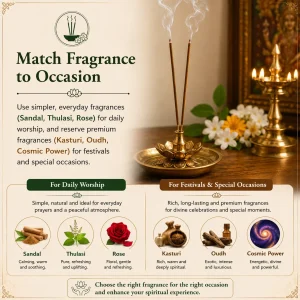
| Daily Pooja | Sandal, Thulasi, Bilwapatra, Rose |
| Meditation & Yoga | Woods, Sandal, Jasmine, Cosmic Power |
| Shiva Worship | Bilwapatra, Sandal |
| Vishnu / Lakshmi Worship | Thulasi, Rose, Kasturi |
| Festival Occasions | Kasturi, 3 in 1 Premium, Cosmic Power |
| Floral Fragrance Lovers | Rose, Jasmine |
| Premium Experience | Premium (3 in 1), Kasturi, Cosmic Power |
| Relaxation & Sleep | Jasmine, Woods |
| Purification | Thulasi, Sandal |
What Is Panchagavya-Based Agarbatti?
Panchagavya refers to a traditional blend of five sacred cow-derived substances: milk, curd, ghee, cow urine (Gomutra), and cow dung. In Vedic tradition, each of these is considered deeply purifying and spiritually potent.
Panchagavya-based agarbatti incorporates these ingredients into the incense formulation, resulting in incense that carries traditional sanctity alongside its aromatic qualities. For devotees who observe Dharmic practices closely, this connection to the sacred cow (Gaumata) and Vedic tradition makes Panchagavya agarbatti a preferred choice for daily worship. Panchagavya-based agarbatti combines traditional ingredients with devotional practices. Explore our Panchagavya Herbal Agarbatti Collection.
Practical Tips for Using Agarbatti Safely and Effectively
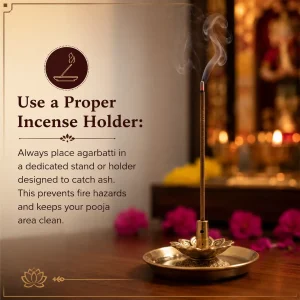
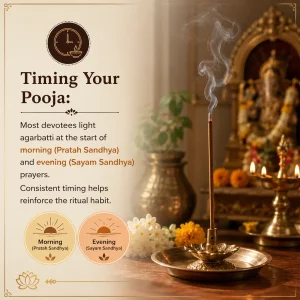
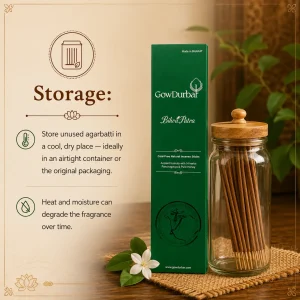
Getting the most out of your herbal agarbatti is as much about how you use it as which fragrance you choose:

Exploring the GowDurbar Herbal Agarbatti Collection
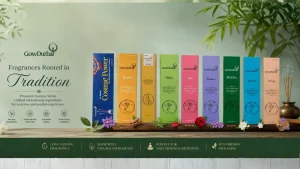
GowDurbar offers a complete range of herbal agarbatti crafted to suit every devotional need — from the simplicity of daily worship to the richness of festival celebrations. Each fragrance in the collection is formulated with natural ingredients and traditional methods:
- Sandal Agarbatti — The timeless devotional classic
- Rose Agarbatti — Fresh, floral, and uplifting
- Jasmine Agarbatti — Sweet, soothing, and sacred
- Kasturi Agarbatti — Rich, warm, and premium
- Thulasi Agarbatti — Purifying, sacred, and deeply traditional
- Bilwapatra Agarbatti — Devotional essence for Shiva worship
- Woods Agarbatti — Grounding and meditative
- Cosmic Power Agarbatti — Layered premium fragrance blends
- 3 in 1 Premium Agarbatti — Kesar, Sandal, and Oudh in one pack
FAQ Section
1. What is herbal agarbatti?
Herbal agarbatti is made using natural ingredients such as herbal powders, natural wood powders, Panchagavya, and fragrance ingredients. It is commonly used for pooja, meditation, and spiritual practices.
2. What are the benefits of using herbal agarbatti?
Herbal agarbatti helps create a devotional atmosphere, enhances daily pooja rituals, supports meditation, freshens living spaces, and adds a pleasant fragrance to spiritual environments.
3. Which agarbatti fragrance is best for daily pooja?
Sandal, Thulasi, Rose, and Bilwapatra Agarbatti are popular choices for daily pooja due to their pleasant and devotional fragrance profiles.
4. Which agarbatti is suitable for meditation and yoga?
Woods Agarbatti, Sandal Agarbatti, Jasmine Agarbatti, and Cosmic Power Agarbatti are often preferred for meditation and yoga because of their calming and uplifting aromas.
5. What is Panchagavya-based agarbatti?
Panchagavya-based agarbatti is made using traditional Panchagavya ingredients along with herbal and natural ingredients. It is widely preferred for spiritual and devotional practices.
6. How many agarbatti sticks should be used during pooja?
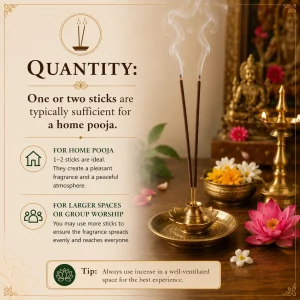
One or two agarbatti sticks are generally sufficient for daily home pooja. Larger spaces or group worship settings may require additional sticks.
7. How should agarbatti be stored?
Agarbatti should be stored in a cool, dry place away from moisture and direct sunlight. Keeping it in its original packaging or an airtight container helps preserve its fragrance.
8. Which GowDurbar Agarbatti fragrance should I choose?
Choose Sandal or Thulasi for daily worship, Rose or Jasmine for floral fragrances, Bilwapatra for Shiva worship, Woods for meditation, and Kasturi, Cosmic Power, or 3 in 1 Premium Agarbatti for festivals and special occasions.
Conclusion: Choosing Agarbatti as an Act of Devotion
The choice of agarbatti is more than a lifestyle preference — it is a small but meaningful act of intentionality in spiritual practice. When you select a fragrance that resonates with the deity you worship, the ritual you observe, or the quality of mind you want to cultivate, the simple act of lighting incense becomes part of the devotion itself.
Herbal agarbatti, rooted in natural ingredients and traditional formulations, brings authenticity and depth to this practice. Whether you are drawn to the timeless warmth of sandalwood, the sacred purity of Thulasi, the earthy devotion of Bilwapatra, or the luxurious complexity of Oudh — there is a fragrance that honours your practice.
Choose with intention. Light with devotion.
Explore the full GowDurbar Herbal Agarbatti collection and bring the tradition of sacred fragrance into your daily worship.